Green Offices Take Over 80% of India Office Leasing
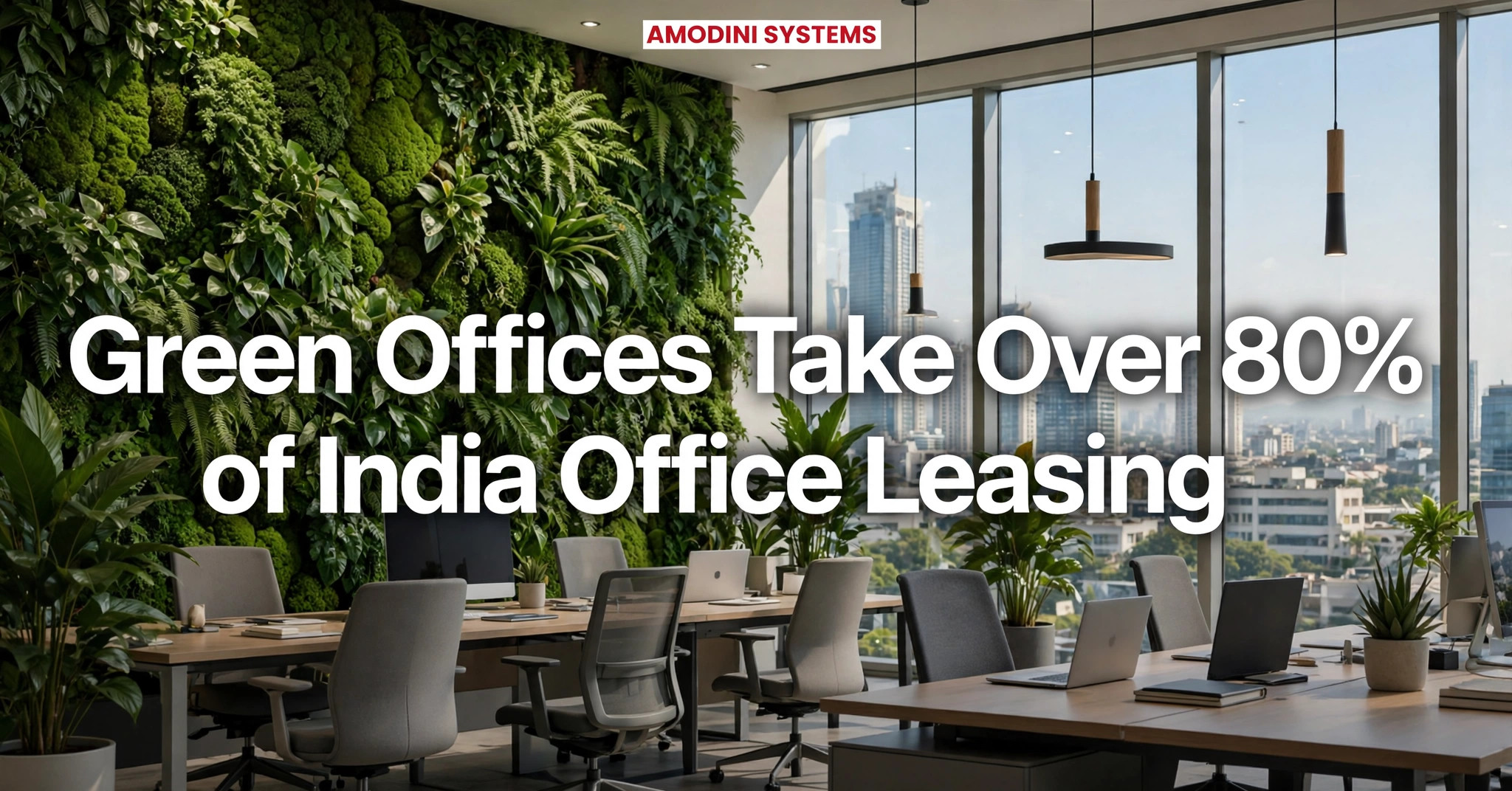
Green-certified buildings are no longer a niche choice. They are now the default. Colliers India expects leasing in green-certified offices to reach 60 to 65 million sq ft in 2026, over 80 per cent of office leasing across India’s top seven cities. In Delhi NCR, companies planning a new office with office interior designers in Noida will find almost every Grade A option already certified.
The climb has been steady, not sudden. Green buildings took 74 per cent of leasing in 2023 and 76 per cent in 2025, and are projected to cross 80 per cent in 2026. From 2023 to 2026, about 210 million sq ft of the 275 million sq ft leased in the top seven cities is expected to be in green-certified buildings.
Delhi NCR is ahead of the rest of India. Between 2023 and 2026, 85 to 90 per cent of all office leasing in NCR is expected to be in green assets, the highest share of any city. Hyderabad follows at 80 to 85 per cent. Bengaluru leads on volume, with 59 million sq ft of green leasing in the same period. Office interior designers in Delhi now treat green certification as a starting point, not a selling point.
Technology companies are driving the change. They account for 30 to 35 per cent of all leasing in green buildings, and nearly 80 per cent of technology occupiers prefer certified properties. BFSI firms and engineering and manufacturing companies follow, at 20 to 25 per cent and 15 to 20 per cent of green leasing.
New supply is moving the same way: green buildings are expected to make up 75 to 80 per cent of all new office supply in 2026, adding 45 to 50 million sq ft. Colliers expects green-certified stock to reach close to 800 million sq ft in the next two to three years, up from 600 to 650 million sq ft now. By 2030, green assets could account for nearly three-fourths of India’s Grade A office stock.
What this means for your next office
A green certificate belongs to the building, but the fit-out decides whether the promise reaches the people working inside it. A certified tower with poor daylight, harsh lighting and stuffy interiors still leaves employees tired by the afternoon. Most occupiers miss this: they check the certificate, then fit out the interiors as if it did not matter.
For a company signing a lease in Noida or Gurgaon today, three checks matter before the fit-out begins. First, ask for the building’s actual certification, LEED, IGBC or GRIHA, and its level, not just a brochure mention. Second, plan the interiors to match the building: daylight at the desks, low-VOC materials, lighting that adjusts through the day, and planting that survives indoors. Third, treat air quality as a design input, with ventilation and filtration in the layout from the start.
The same applies to older buildings. Much of India’s office stock is more than a decade old and will be refurbished rather than replaced. A well-planned interior upgrade can bring an old floor far closer to the standard occupiers now expect, without waiting for a new tower.
Green is no longer a premium feature only large multinationals ask for. In Delhi NCR it is already the baseline, and the rest of India will follow soon. Companies that plan with this in mind will sign leases that still make sense five years from now. Those that ignore it will find candidates walking away from their office. Planning an office in NCR? Talk to our team about a turnkey office interior built around daylight, air quality and materials.
Source: The Tribune