Vertical Gardening in Offices: Practical Design Tips
Vertical gardening in offices is a modern way to bring plants into the workplace by using walls and vertical structures instead of floor space. It means growing plants upward on panels, frames, or specially designed systems fixed to walls. This approach helps offices enjoy greenery even when space is limited. It is becoming popular because it improves air quality, reduces stress, and makes workplaces look fresh and professional.
In today’s busy work environments, companies want offices that feel healthy and attractive. Vertical gardens offer a smart solution. They turn empty walls into living green features without crowding desks or walkways. With proper planning and design, any office can benefit from a vertical garden.
What Is Vertical Gardening in Offices?
Vertical gardening in offices is the practice of growing plants on vertical surfaces such as walls, partitions, or freestanding panels inside the workplace. Instead of traditional pots on the floor, plants are arranged in layers going upward.
This method is useful for offices with limited space. It allows businesses to add greenery without reducing usable floor area. Vertical gardens can be small decorative panels or large living walls covering entire office sections.
Many modern offices prefer vertical gardens because they combine beauty and function. They not only improve the look of the workspace but also support employee well-being.
Why Offices Are Choosing Vertical Gardens
Businesses today understand that workplace environment affects productivity. Vertical gardening has become popular because it offers many practical benefits.
First, it improves indoor air quality. Plants naturally absorb pollutants and release oxygen, which helps employees feel more comfortable during long working hours. Cleaner air can also reduce headaches and fatigue.
Second, vertical gardens reduce stress levels. Studies show that greenery in the workplace helps employees feel calmer and more focused. A green wall can make even a busy office feel relaxed.
Third, they enhance office aesthetics. A well-designed vertical garden creates a premium and modern look that impresses clients and visitors.
Finally, vertical gardening makes efficient use of space. Offices in cities often have limited room, and vertical systems allow greenery without clutter.
Best Locations for Vertical Gardening in Offices
Choosing the right location is one of the most important steps. Not every wall is suitable for a vertical garden.
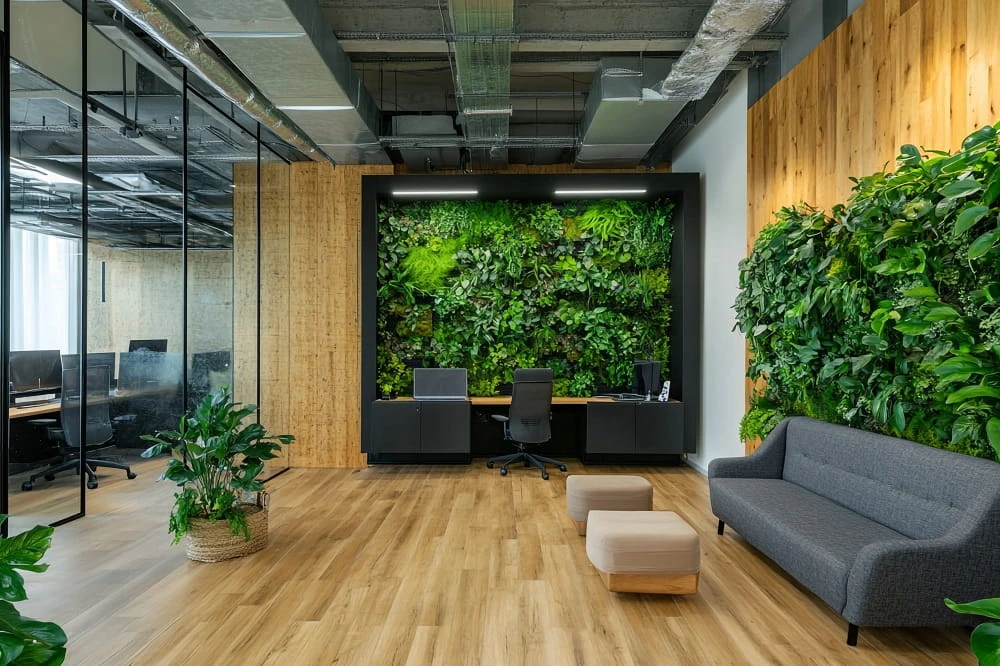
Reception areas are excellent choices. A green wall behind the reception desk creates a strong first impression and makes the office look professional and welcoming.
Conference rooms are another good option. Plants in meeting spaces can create a calm atmosphere and improve concentration during discussions.
Workstations and open office areas can also benefit. Small vertical panels near work zones add freshness without distracting employees.
Breakout areas and cafeterias are ideal for larger installations. These spaces often need a relaxed feel, and vertical gardens help create that environment.
Avoid placing vertical gardens in areas with very low light unless you plan to use artificial grow lights.
Types of Vertical Garden Systems for Offices
Different systems are available depending on budget, maintenance capacity, and design goals. Understanding these options helps in making the right choice.
1. Modular Panel Systems
These are pre-made panels that hold multiple plants. They are easy to install and replace. Most offices prefer this option because it is flexible and clean-looking.
2. Pocket Felt Systems
These use fabric pockets attached to walls. Plants grow inside the pockets. They are lightweight and affordable but require careful watering management.
3. Hydroponic Living Walls
These are advanced systems where plants grow without soil using nutrient-rich water. They look very premium but need professional maintenance.
4. Freestanding Vertical Units
These are movable vertical plant stands. They are perfect for offices that want flexibility without permanent wall installation.
Choosing the Right Plants for Office Vertical Gardens
Plant selection is critical for success. Office environments usually have controlled temperature and limited sunlight, so plants must be hardy and low maintenance.
Below is a helpful comparison table:
| Plant Name | Light Requirement | Maintenance Level | Best For |
|---|---|---|---|
| Pothos | Low to medium | Very low | Beginners |
| Snake Plant | Low | Very low | Low-light offices |
| Philodendron | Medium | Low | Decorative walls |
| Ferns | Medium | Medium | Humid offices |
| Peace Lily | Low to medium | Low | Air purification |
When choosing plants, always consider:
-
Available natural light
-
Office temperature
-
Maintenance support
-
Desired visual style
Low-maintenance plants are usually best for workplaces.
Practical Design Tips for Vertical Gardening in Offices
Design plays a major role in how effective and attractive the vertical garden becomes. Poor planning can lead to maintenance problems and visual clutter.
Plan the Layout Carefully
Start by measuring the wall space and understanding viewing angles. The garden should be visible but not overwhelming. In offices, clean and structured layouts work better than wild, dense designs.
Symmetrical patterns often look more professional. However, creative companies may prefer organic layouts for a more relaxed feel.
Ensure Proper Lighting
Light is essential for plant health. If the office has large windows, place the vertical garden where it can receive indirect sunlight.
For low-light offices, install LED grow lights. These lights are energy-efficient and help plants grow properly indoors.
Avoid placing gardens in completely dark corners unless artificial lighting is planned from the start.
Install a Reliable Irrigation System
Watering is one of the biggest challenges in vertical gardening. Manual watering can be messy and inconsistent.
Most modern office vertical gardens use drip irrigation systems. These provide controlled watering and reduce maintenance effort.
Automatic irrigation is highly recommended for medium to large installations.
Focus on Easy Maintenance
An office vertical garden should not become a burden. Choose systems that allow easy plant replacement and cleaning.
Keep maintenance access in mind during design. If the garden is too high or tightly packed, routine care becomes difficult.
Many offices hire monthly plant maintenance services to keep the wall healthy and attractive.
Match the Office Interior Style
The vertical garden should complement the overall office design. For corporate environments, clean green patterns with simple frames work best.
Creative agencies may prefer mixed textures and colorful foliage.
The goal is to make the garden feel like part of the office, not an afterthought.
Common Mistakes to Avoid
Many offices install vertical gardens but fail to maintain them properly. Avoiding common mistakes will save time and money.
One major mistake is choosing high-maintenance plants. Offices are busy environments, so delicate plants often fail.
Another mistake is poor drainage planning. Without proper water management, walls can develop moisture problems.
Overcrowding plants is also common. A dense wall may look good initially but becomes difficult to maintain.
Ignoring lighting requirements can quickly damage the garden. Always evaluate natural and artificial light before installation.
Finally, lack of maintenance planning leads to neglected green walls. Every vertical garden needs routine care.
Cost Considerations for Office Vertical Gardens
Budget planning is important before starting the project. Costs vary depending on size, system type, and plant selection.
Small decorative panels are affordable and suitable for startups. Medium modular walls require moderate investment but provide strong visual impact.
Large hydroponic living walls are premium installations and need professional setup and maintenance.
Businesses should also consider ongoing costs such as:
-
Water usage
-
Electricity for grow lights
-
Plant replacement
-
Maintenance services
Planning the total cost helps avoid surprises later.
Future of Vertical Gardening in Workspaces
Vertical gardening is expected to grow rapidly in modern office design. As companies focus more on employee wellness and sustainable interiors, green walls will become more common.
New technologies are making vertical systems smarter and easier to maintain. Automated irrigation, sensor-based monitoring, and modular designs are improving reliability.
In the future, vertical gardens may become a standard feature in premium office spaces rather than a luxury addition.
Final Thoughts
Vertical gardening in offices is a smart and practical way to bring nature into the workplace without using valuable floor space. When planned correctly, it improves air quality, enhances office appearance, and supports employee well-being.
The key to success lies in choosing the right location, selecting low-maintenance plants, ensuring proper lighting, and installing reliable irrigation systems. Offices that treat vertical gardens as long-term design elements rather than quick decorations achieve the best results.
With thoughtful planning and regular care, vertical gardens can transform ordinary office walls into vibrant, healthy, and professional green spaces that benefit both employees and visitors.